New kitten checklist: what to prepare and how to care for a kitten in the first week
Bringing a new kitten home? A checklist of supplies, how to kitten-proof your home, plus feeding, litter training and bonding tips for the first week.
Bringing a new kitten home is exciting, but first-time owners often worry when the kitten hides under the bed, eats very little or has accidents outside the litter box. In the first few days, most of this is normal. This guide covers what to prepare and how to care for your kitten during the first week.
What to buy before your kitten comes home
Having supplies ready makes the first day calmer for everyone:
- The same food it eats now: ask whoever is handing over the kitten (the previous family, a rescue group or a shop) what it currently eats, and buy exactly that.
- Food and water bowls: shallow bowls are easier for small faces and easier to wash.
- A litter box and litter: choose a box with low sides so the kitten can climb in easily.
- A place to sleep: a soft bed, or simply a cardboard box lined with an old towel. Cats love snug, hidden spots.
- A carrier: for the trip home and for vet visits.
- A scratching post and a few toys: a feather wand and a small ball are enough to start.
Also ask whether the kitten has seen a vet, had any vaccinations or been dewormed, and keep any paperwork to bring to the first checkup.
How to kitten-proof your home
Kittens are curious and can squeeze into places you would never expect. Before your kitten arrives, walk through your home and:
- Tidy away electrical cables, charging cords and curtain cords. Put away needles, thread, rubber bands and small objects a kitten could swallow.
- Close windows or fit screens on windows and balconies. Do not assume a cat will always land safely.
- Store human medicines, cleaning products and insect sprays out of reach.
- Be careful with houseplants. Some plants and flowers are highly toxic to cats, lilies being the best-known example. If you are not sure a plant is safe, move it out of reach for now.
- Check the washing machine, cupboards and drawers before closing them.
Day one: start with one small room
Instead of giving the kitten the whole house, set it up in one small, quiet room with food, water, a litter box and a bed. A small space helps the kitten feel safe and makes it easier to remember where the litter box is.
Open the carrier door and let the kitten come out on its own. If it hides, do not pull it out. Sit nearby, talk softly and let it come over to sniff your hand when it is ready. Once it seems confident, open up the rest of the home a room at a time.
If you already have a cat or dog, keep the newcomer separate at first, at least until a vet has checked it. Then introduce them gradually: first through scent, then through a gap in the door, and only then face to face with someone supervising.
Feeding and litter training a new kitten
Feeding. A kitten may eat little for the first few days in a new place. Stick with its usual food. If you want to switch, mix the new food into the old one gradually over several days rather than changing all at once. Always keep fresh water available. Many people think kittens should drink cow's milk, but plenty of cats digest it poorly, so do not give it on your own initiative. How much to feed and how many meals a day depend on age and condition, so ask your vet.
Litter training. Put the litter box somewhere quiet and away from the food bowls. After meals and naps, gently place the kitten in the box. Scoop it every day. If the kitten has an accident, do not scold it or push its nose into the mess; just clean the spot thoroughly so the smell is gone.
Bathing. Cats are excellent at grooming themselves, so a kitten usually does not need a bath in the first week. If it gets very dirty, ask your vet how best to clean it.
Bonding and playing with your kitten
- Let it sleep. Kittens sleep a lot, and that is normal.
- Do not carry it around constantly or pass it from person to person, especially in the first few days.
- Play with a wand or a toy, not your hands, so the kitten does not learn that human fingers are prey to bite and scratch.
- If you have young children, show them how to sit still and stroke gently, and never to pull the tail or lift the kitten high.
Take your kitten to the vet early
Even if your kitten looks healthy, book a vet visit in the first few days. The vet will do a general checkup, look for parasites and advise on a schedule for vaccinations, deworming and neutering that suits the kitten's age and health. Follow the vet's guidance on these, and do not buy medicine and treat the kitten yourself.
Go to the vet straight away if the kitten stops eating, vomits, has diarrhea, seems lethargic, struggles to breathe or has a lot of discharge from its eyes or nose. Kittens can weaken quickly, so do not wait to see whether it gets better on its own.
Frequently asked questions
Is it normal for a new kitten to hide?
Yes. Hiding for the first day or two is a common way for a kitten to cope with a new place. Give it a small, quiet room and let it come to you. If it also stops eating or seems unwell, contact a vet.
Should I give my kitten milk?
Do not give cow's milk on your own initiative, because many cats digest it poorly. Fresh water and the food your kitten is used to are the safest choice; ask your vet about anything else.
When should I take a new kitten to the vet?
Within the first few days, even if it looks healthy, and right away if you notice warning signs such as not eating, vomiting, diarrhea or breathing problems.
Not ready for a real cat yet?
A cat is a commitment of many years. If you do not have the time or space yet, or your rental does not allow pets, waiting is the right decision. In the meantime, you can read about Vietnamese cats such as calicos, tabbies and black cats to see which kind you might click with.
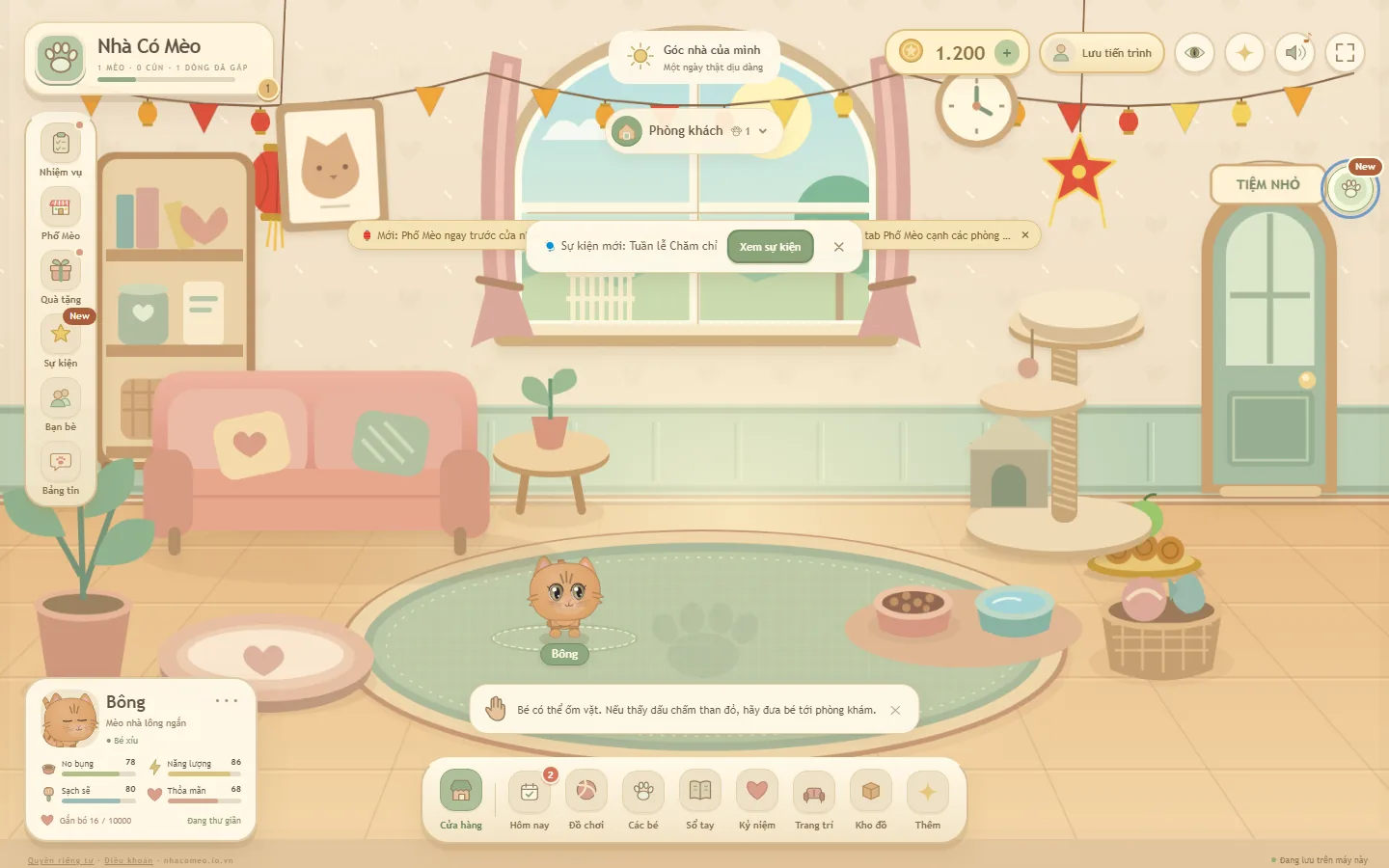
And if you just want a little cat to look after every day, Nhà Có Mèo by TrioX Studios is a free cat and dog care game that runs in your browser. It has no real-money top-ups, its rewarded ads for gifts are entirely optional, and you do not need to sign in. Your pets ask for food, demand baths and sometimes get sick and need the clinic, but they never die. New players can follow the Nhà Có Mèo beginner's guide, or compare options first in our post on choosing a cat game.