The 5 love languages: what they are and how to spot them in daily life
The 5 love languages by Gary Chapman: words of affirmation, quality time, gifts, acts of service and physical touch. How to recognize each, with daily examples.
The 5 love languages are five common ways people express and feel love: words of affirmation, quality time, receiving gifts, acts of service and physical touch. The idea comes from Gary Chapman, an American marriage counselor, in his book "The Five Love Languages", first published in 1992. This article explains each language, how to recognize yours and your partner's, and what each looks like in everyday life.
What is a love language?
A love language is the way a person tends to show affection, and also the way that makes them feel most loved. Chapman's core idea is simple: two people can love each other sincerely and still feel something is missing, because each is "speaking" a different language.
Picture someone who shows love by fixing their partner's bike and cooking dinner, while their partner is really hoping to hear "I'm proud of you". Both are trying, but the message is not landing.
The five love languages, with everyday examples
Each language below comes with a short definition, signs to look for, and small things you can do this week.
1. Words of affirmation
Words of affirmation are spoken or written words that show appreciation, praise or encouragement. People with this language feel loved when they hear specific, sincere words.
- How to spot it: they remember a compliment for a long time, and a harsh comment hurts them for just as long.
- Everyday examples: text "you did great in that presentation", leave a note on their desk, say thank you for something small.
2. Quality time
Quality time means being together with full attention. Not just sitting in the same room, but doing things together and talking without phones getting in the way.
- How to spot it: they get upset when you check your phone mid-conversation, and they often ask "what are we doing this weekend?".
- Everyday examples: an after-dinner walk, cooking together, a screen-free evening. Date night ideas at home and on weekends has plenty of suggestions for this language.
3. Receiving gifts
For this language, a gift is a sign that says "I was thinking of you". The value is in the thought, not the price.
- How to spot it: they keep cinema tickets and little cards, and often bring small treats for other people.
- Everyday examples: pick up their favorite snack on the way home, a single flower, a small object that made you think of them. Handmade anniversary gifts are a natural fit too.
4. Acts of service
Acts of service are practical things that make the other person's life easier. For them, actions speak louder than words.
- How to spot it: they are touched when you do the dishes or fix something without being asked, and they often show love by taking care of you.
- Everyday examples: make breakfast, pick them up when it rains, take on a task they have been dreading.
5. Physical touch
Physical touch is closeness expressed through contact: holding hands, hugging, leaning on a shoulder. People with this language feel safe and loved through small daily touches.
- How to spot it: they reach for your hand, hug hello, and feel distant when there has not been a hug in a while.
- Everyday examples: a hug when you get home, holding hands on a walk, a shoulder rub when they are tired. Always respect what feels comfortable for them.
How do you find your love language and your partner's?
The simplest way is to watch three things: what they complain about, what they ask for, and how they show affection to others. The three answers usually point the same way.
You can also just ask: "When do you feel most loved?". The 50 questions for couples include a whole set about how you show love. For couples in a long-distance relationship, where touch and time together are limited, knowing each other's language helps you find good substitutes: a message, a parcel in the mail, or a video call where you cook together.
A note: this is a framework, not a diagnosis
The 5 love languages are a framework for understanding each other, not a psychological diagnosis or a scientific test. Use them to start conversations, not to label people.
- A person can feel loved through several languages at once, and that can change across different stages of life.
- Do not turn the idea into a demand, as in "my language is gifts, so why don't you buy me any?".
- Love languages do not explain every problem. If conflict is constant, or one person feels unsafe or controlled, reach out to a counselor or a couples therapist.
Keep track of the small things they love
Once you know how your partner feels loved, the next step is remembering the specifics: the snack they like, the compliment that makes them smile, the song they keep playing. The more specific, the better your gestures "speak" their language.
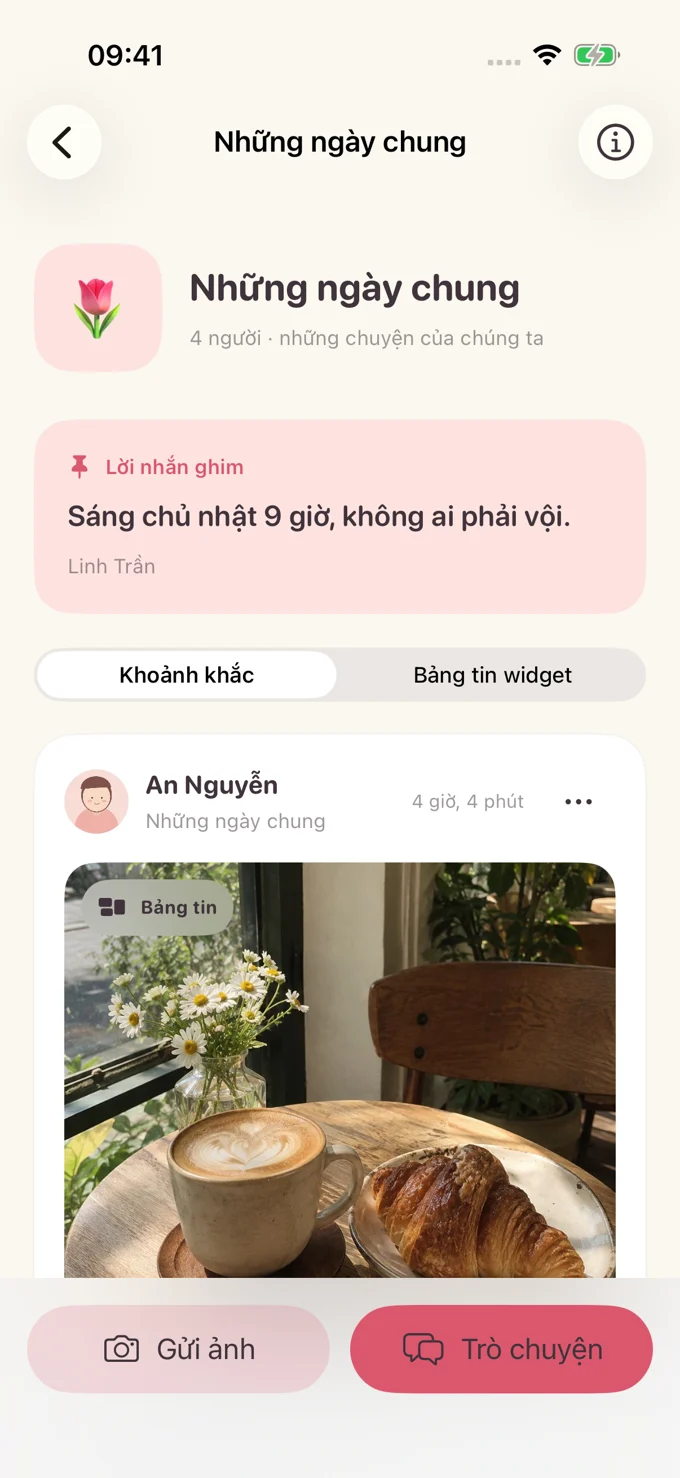
TrioX Studios makes Little Us, an iPhone app available on the App Store. You share photos in a private group with a message or a short voice note, keep a photo journal searchable by caption, and put favorite moments on your Home Screen widget. A recorded compliment or a photo of breakfast you made are both small ways to speak your partner's love language.
Frequently asked questions
Who came up with the 5 love languages?
Gary Chapman, an American marriage counselor, in his book "The Five Love Languages", first published in 1992.
Can someone have more than one love language?
Yes. Many people relate to two or three, and the order can change over time.
Can two people with different love languages be a good match?
Absolutely. Different languages do not mean incompatibility. It just means learning to speak each other's.
Do love languages apply to family and friends?
Yes. The idea can also help you understand how parents, children or close friends show care, as long as you use it to listen rather than to judge.