Career exploration for students: how to try a job before choosing your major
Choosing a major is easier once you have tried the work. Career exploration ideas for students: interviews, part-time work, volunteering and simulations.
The surest way to avoid picking the wrong major is to try the work first, even a small slice of it. Students can start right away: talk to people in the job, take part-time work or volunteer, go to career fairs, read real job ads and use career simulation games to picture a working day.
Why try a job before choosing a major?
Trying a job first helps you choose based on what the work is really like, not just what the course is called. Program names in admission brochures rarely tell you what people do all day. Someone who loves children might picture teaching as standing in front of a class, and forget the lesson planning, the marking and the parent meetings.
Trying a job is not about finding a perfect answer. It helps you answer more concrete questions: do you prefer working with people or with numbers, a fast pace or a steady one, and which kinds of pressure can you live with? Those answers are a much better foundation for choosing a career that fits.
1. Talk to people who do the job
An informational interview is simply a conversation with someone who does the work you are curious about. Relatives, older students, teachers and neighbors can all be "insiders". Ask for about half an hour and come with specific questions:
- What does a normal working day look like for you?
- Which part of the job tires you out the most?
- If you could choose again, would you study the same thing?
- What do newcomers usually struggle with?
Talk to more than one person in the same field, because every workplace is different.
2. Part-time work, internships and volunteering
Part-time jobs and short internships
A part-time job, even serving in a café or helping at a weekend market stall, teaches you a lot about dealing with customers, being on time and handling pressure. University students can look for short internships or job shadowing at companies linked to the field they are considering.
If you are still young, talk it through with your parents first and check the local rules on work for minors. Be wary of offers that promise "easy work, high pay", or of anyone asking you to pay a deposit or a fee to secure a place.
Volunteering and clubs
Volunteering lets you try roles you are not yet qualified to do officially: tutoring younger children, helping run events, supporting animal rescue groups. School clubs work the same way. The communications team, the finance team and the partnerships team are each a miniature version of a real job.
3. Career fairs and real job descriptions
University open days, job fairs and company visits are chances to ask lecturers, students and recruiters directly. Prepare a few questions in advance so you make the most of the time.
A tip few people use: read real job ads for the career you are interested in. The "responsibilities" and "requirements" sections tell you quite clearly what people in that job do every day and which skills they need. Read about ten ads and you will start to see the patterns.
4. Picture the job through a career simulation game
Some jobs are very hard to try while you are still at school, such as company accounting or teaching. A simulation game can help you picture the rhythm of those jobs in a fun, low-pressure way.
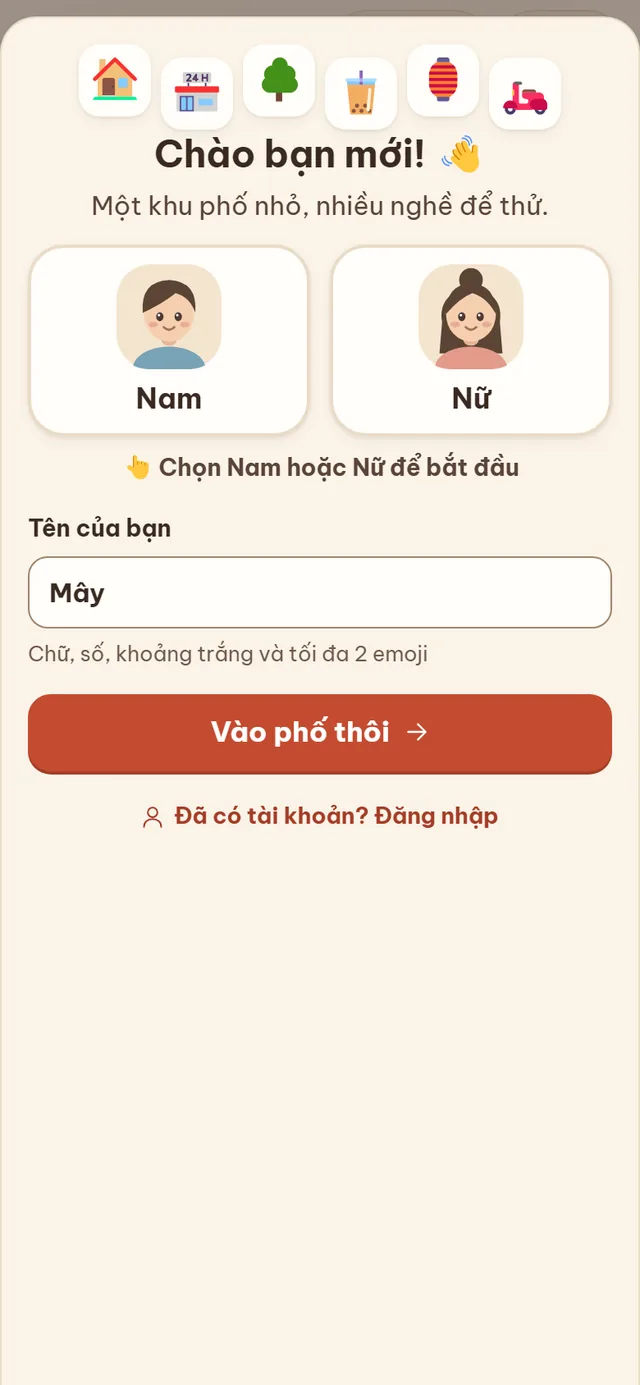
Phố Có Chuyện by TrioX Studios is one example. The browser game has more than 20 jobs, from a bubble tea shop, a corner grocery and delivery to teaching and accounting. To become a teacher or an accountant, you have to send an application and pass an interview, much like a real job hunt. Once on shift, you do concrete tasks, such as posting debit and credit entries as an accountant, or dealing with a parent who messages late at night as a teacher. After each situation, you see how everyone involved experienced it.
A game only helps you imagine a job and sparks curiosity. It cannot replace real experience, and it cannot replace advice from teachers, career counselors or people who actually do the work.
Use the game as a warm-up: try a few jobs, note which ones excite you, then take those notes to real people. You can read more about the genre in our article on career simulation games, or learning accounting through a game if you are considering accounting. For a walkthrough of the first shifts, see our Phố Có Chuyện beginner's guide.
Write it down to choose your major more wisely
After each experience, spend a few minutes writing down what you did, which parts you enjoyed, which parts felt heavy and whether you would want to do it every day. After a few months, those notes reveal your own patterns.
Finding out which jobs do not suit you is a valuable result too. Once you have a short list of careers you like, look closely at the study programs and entry requirements of each school, and talk it over with your family and teachers before you decide.
Frequently asked questions
When should students start exploring careers?
Earlier is easier, but it is never too late. A few conversations and small experiences in the last years of school already give you much more to go on when choosing a major.
What if I try a job and do not like it?
That is a useful result. Knowing what does not suit you narrows the list and saves time later.
Can a game help me choose a career?
It can help you picture a job and decide what to explore next. It should be one input among several, alongside conversations with real people and hands-on experience.
Start with one small step
This week, try one thing: arrange a chat with someone whose job you are curious about, or read five job ads for that career. If you want a gentler warm-up, play a shift at phocochuyen.io.vn, free and with nothing to install. To learn more about the game first, read our introduction to Phố Có Chuyện.