How to make money from a game without ads: 6 player-friendly models
Monetize your game without ads: premium pricing, expansions, voluntary support, cosmetics, premium tiers and work-for-hire, with the pros and cons of each.
Ads are the easiest way to add revenue to a game, and also the easiest way to annoy the people playing it. The good news is that there are plenty of ways for a game to support its makers without interrupting play. Here are six common models, with honest pros and cons, so you can pick the one that fits your game.
Why do many indie games skip ads?
Going ad-free means putting the player experience ahead of short-term revenue. An ad that pops up mid-session breaks concentration, which hurts most in puzzle games and in relaxing games people open to unwind. In games for kids, ads also raise questions about what content is shown and what data is tracked, which parents care about a lot.
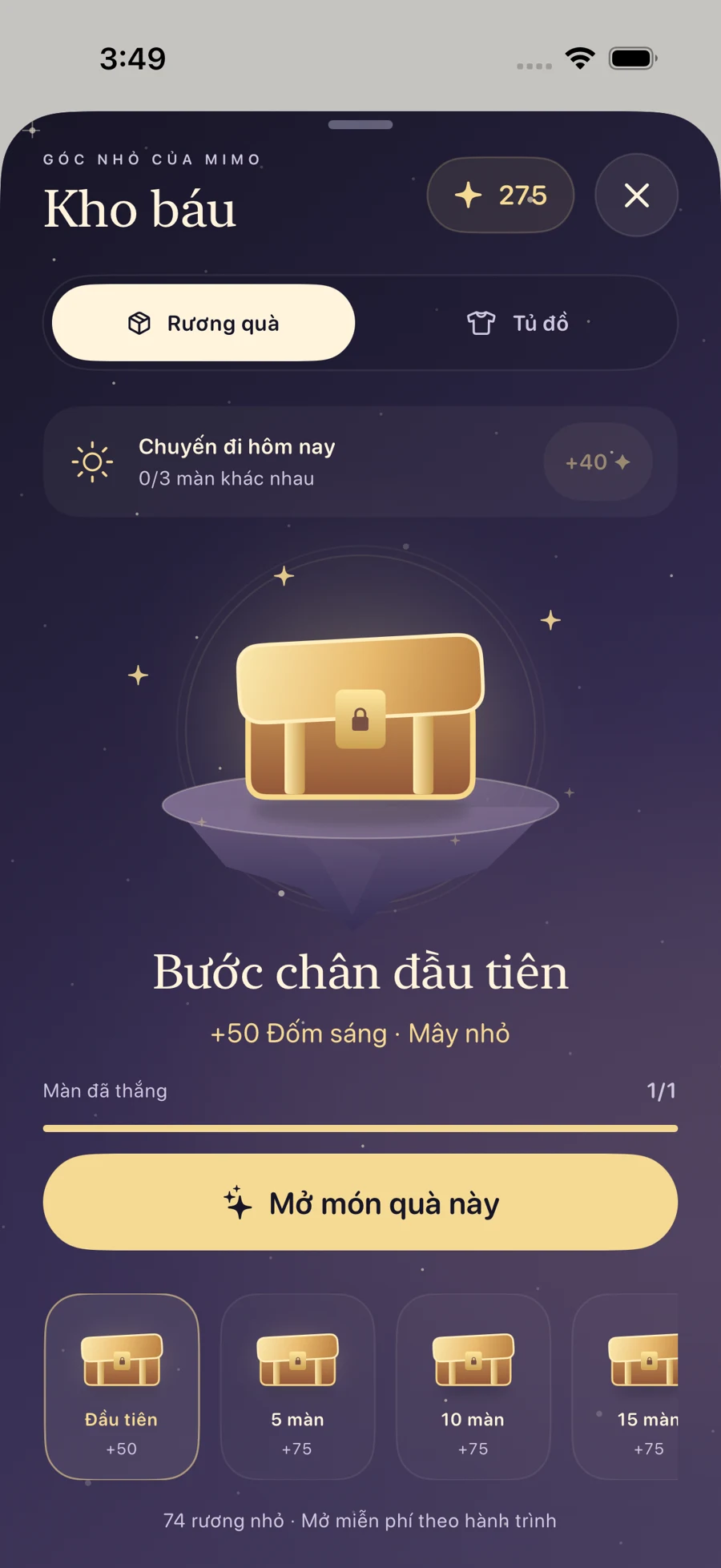
At TrioX Studios, CUTVERSE is ad-free: the gravity puzzle game for iPhone, still in development, is free with no ads and no in-app purchases. Nhà Có Mèo, a browser game about raising cats and dogs, takes a middle path: it is free to play, sells no top-ups and only has reward ads that players choose to watch, with no pop-up ads interrupting play. Coins are earned by sending your pets out to play, to work and by finishing tasks. No ads does not mean no income. It just means choosing a different path.
One-time purchase and expansions
One-time purchase (premium)
A one-time purchase means players buy the game at a fixed price and get all of it, with nothing else to pay later. It is the classic model on PC and consoles.
- Pros: transparent. Players know exactly what they are paying for, and you design purely for fun instead of for checkout moments.
- Cons: a higher barrier at the start, since players must trust you before they try anything. Sales tend to cluster around launch and taper off.
- Best for: story-driven games, puzzle games with lots of levels, games with a convincing trailer.
A friendly variation is a free demo: let people play the first few levels, then unlock the full game with a single payment.
Expansions (DLC)
An expansion is new content sold separately after the main game ships: new chapters, characters or modes.
- Pros: loyal players get a reason to come back, and you earn after launch without building a new game from scratch.
- Cons: if an expansion feels like content cut from the base game, players will notice. The main game also needs an audience before anyone buys extra content.
- Best for: games built around chapters, levels or worlds that are easy to extend.
The rule of thumb: the base game must feel complete on its own.
Voluntary support and cosmetic items
Voluntary support
Voluntary support means the game is free and players can choose to chip in if they like it, through a "buy me a coffee" button, a membership page or a crowdfunding channel.
- Pros: zero barrier to entry. People give because they value what you made.
- Cons: income is unpredictable and usually small. It works better as a side stream than a main one.
- Best for: browser games, personal projects, games with a close community.
If your game is on the App Store or Google Play, an in-app tip button may fall under in-app payment rules. Check Apple's App Review Guidelines and the Google Play Console Help Center, since the rules can change.
Cosmetic items
Cosmetics change only how things look, such as outfits, colors, furniture or effects, without making a character stronger.
- Pros: no balance problems. Players who never pay still get the full game, while collectors and people who like to express themselves are often happy to spend on things they love.
- Cons: you need a steady flow of good-looking content, and pushing purchases too often kills the friendly feel. Randomized loot boxes sold for real money are a sensitive area with specific rules in some places, so think carefully.
- Best for: pet games, social games, games with a player avatar.
CUTVERSE shows another angle: all eight outfits for its hero Mimo are unlocked with lights earned in play or with milestone rewards, never sold. Cosmetics can be a reward, not just a product.
Premium tiers and work-for-hire
Premium tiers (freemium with clear limits)
A premium tier gives the basics away for free and charges for the advanced part: more content, more features or higher limits. It can be a one-time unlock or a subscription.
- Pros: people get to try the real thing before paying.
- Cons: drawing the line is hard. Give away too little and nobody stays; give away too much and nobody upgrades. Subscriptions for pure entertainment games are a tough sell.
- Best for: learning platforms, creative tools, products with ongoing server costs.
A nearby example is Mầm, the TrioX classroom learning platform, where teachers create an account and start on a free plan with some usage limits.
Work-for-hire
Work-for-hire means using your game-making skills on projects for businesses, schools and organizations: promotional games, training games, event games or learning apps.
- Pros: steadier income that does not depend on whether your own game gets noticed. Client projects also sharpen your skills and build your portfolio.
- Cons: it takes time away from your own projects, and you have to manage contracts and scope.
- Best for: small studios that already have released work to show.
Our guide to hiring a team to build an app or game explains what clients usually need.
How to choose a model for your game
The right model is the one that matches how people actually play your game. A few questions to ask yourself:
- Do players finish it once or come back every day? One-and-done games suit a one-time price; long-term games suit cosmetics or expansions.
- Who pays? In games for kids, parents pay, and they value clarity.
- What does it cost to run? A game that needs servers needs steady income; a fully offline game costs less after launch.
- Do you have a content plan? If not, do not promise expansions.
If you are just getting started, our guide to indie game development gives you the big picture, and indie game marketing covers how to reach players in the first place.
Frequently asked questions
Can an ad-free game make money?
Yes, through a one-time price, expansions, cosmetics, premium tiers, voluntary support or work-for-hire projects.
Are cosmetics "pay to win"?
No. "Pay to win" means paying to become stronger or win more easily. Cosmetics only change appearance, so non-paying players still compete on equal terms.
Should I combine several models?
You can, for example a one-time price followed by an expansion, or a free game with optional support. Keep it to a few clearly explained options so players are not confused.
TrioX builds apps, games and AI solutions on request. Get in touch via our home page.