Making an indie game with a small team: where to start so you actually finish
Where should a small team start an indie game? Keep scope small, prototype early, design the core loop, playtest, ship on the web first and stay motivated.
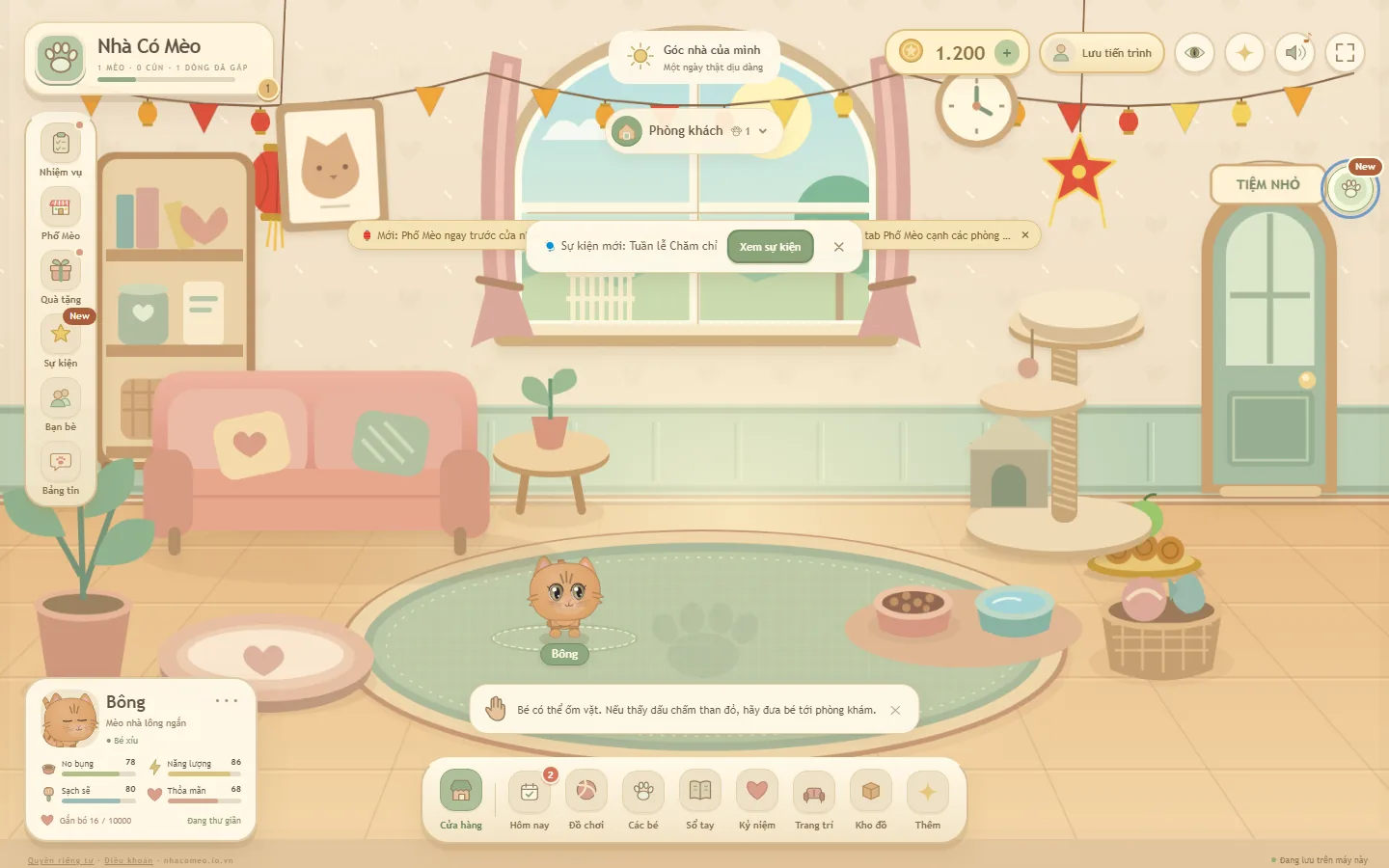
A small team making an indie game should start with an idea small enough to finish, a playable prototype as early as possible, and real players trying it as soon as you can manage. The hardest part is usually not code or art, but keeping scope under control and actually reaching launch day. Here is the approach we at TrioX Studios have found sensible, drawn from making the web games Phố Có Chuyện and Nhà Có Mèo and the iPhone game CUTVERSE.
What is an indie game?
An indie (independent) game is made by an individual or a small team without relying on a big publisher for money or creative decisions. With limited resources, indie games tend to stand out through a clear idea, a distinct personality or an unusual mechanic rather than sheer volume of content. Many indie games are cozy games, puzzles or simulations, genres where a small team can do great work.
Choose a smaller scope than you think
A very common mistake for new teams is starting too big: an open world, several modes, online play. Write your idea as one sentence, then cut everything that does not serve it. A few questions help narrow things down:
- What core action does the player repeat?
- How long is a single session?
- Could the first version have one level, one character, one area?
- Do you have people for art and sound, or should you pick a simpler style?
For example, the idea behind CUTVERSE fits in one sentence: draw a line, above it pulls up, below it pulls down, and guide Mimo to the glowing door. Keys, bounce pads, portals, wind and switches are all variations on that single mechanic.
Prototype before you polish
A prototype is a rough playable build that answers one question: is this mechanic fun? Use simple shapes and flat colors, and skip sound for now. If the rough version is already fun, good art will make it more fun. If it is boring, art rarely saves it.
Use the tool you know best. Godot, Unity or a web library such as Phaser are all fast for prototyping. If you want your game to run in the browser, web game programming compares the options. Joining a game jam on itch.io is a great way to practice prototyping under a deadline.
Design the core loop
The core loop is the cycle of actions the player keeps repeating: do something, get a result, use that result for the next action. A clear loop is what makes people come back. Two examples from TrioX games:
- Phố Có Chuyện: pick a job, open your shift, serve customers and handle situations, earn money and reviews, then spend on renting a room, fixing up a home or saving. The game has more than 20 jobs, but they all follow the same rhythm.
- Nhà Có Mèo: care for your pets by feeding, bathing, playing and taking them to the vet; earn coins by sending them out to play, work and complete tasks; then come back to care for them again. The mini game Mèo Chạy Phố changes the pace when players want something faster.
Beyond the short loop, add a longer one for a sense of progress: new jobs, new levels, new outfits. CUTVERSE has 200 levels across 12 chapters, plus eight outfits unlocked with lights earned in play.
Playtest early and often
Hand the game to other people as soon as you have a prototype, and watch quietly. Do not explain the rules first. Wherever players get confused is where the tutorial or design needs work. While you watch, note:
- Where do they stop or give up?
- Where do they smile, lean in or get excited?
- When they finish, do they want another round?
Friends tend to be polite with feedback, so find some players who do not know you if you can.
Ship on the web first: an edge for small teams
For many games, releasing in the browser is a fast route to real players. There is no store review, fixes reach players right away, and sharing takes a single link. Players do not have to install anything either, as we explained in games with no install.
TrioX's Phố Có Chuyện and Nhà Có Mèo both run in mobile and desktop browsers, and Phố Có Chuyện can also be added to the home screen. Not every game belongs on the web, though. CUTVERSE is an iPhone game that runs fully offline with no account, an experience that suits an installed app better. Pick the platform based on the experience you want to create.
Stay motivated until launch
Small teams rarely run out of ideas; they run out of stamina. A few habits help over the long haul:
- Break work into small milestones, each with something playable.
- Keep a devlog and share screenshots or short clips of progress.
- Keep a "later" list for new ideas instead of adding them right away.
- Set a release date and accept that version one will not be perfect, because web games and apps can both be updated.
- Rest properly between crunch periods.
If you have a game idea but no team yet, TrioX builds apps, games and AI solutions on request. Get in touch on our home page.
Frequently asked questions
Can one person make a game alone?
Yes, many indie games are made by one person. Choose a simple art style, use assets with clear licenses and keep the scope very small.
Should I learn Unity, Godot or web development?
Godot is free, open source and lightweight. Unity has a large community. Web games are ideal when you want players to start from a link. Try building the same small prototype in two tools and keep the one that feels right.
How long does a small game take?
It depends on scope and how much time you can give it. Instead of guessing a number, list the minimum features and estimate each one.