Vietnamese Tết family traditions and an easy lunar calendar prep plan
Vietnamese Lunar New Year customs at home: cleaning, the Kitchen Gods ceremony, the five fruit tray, New Year wishes and lucky money, plus a lunar timeline.
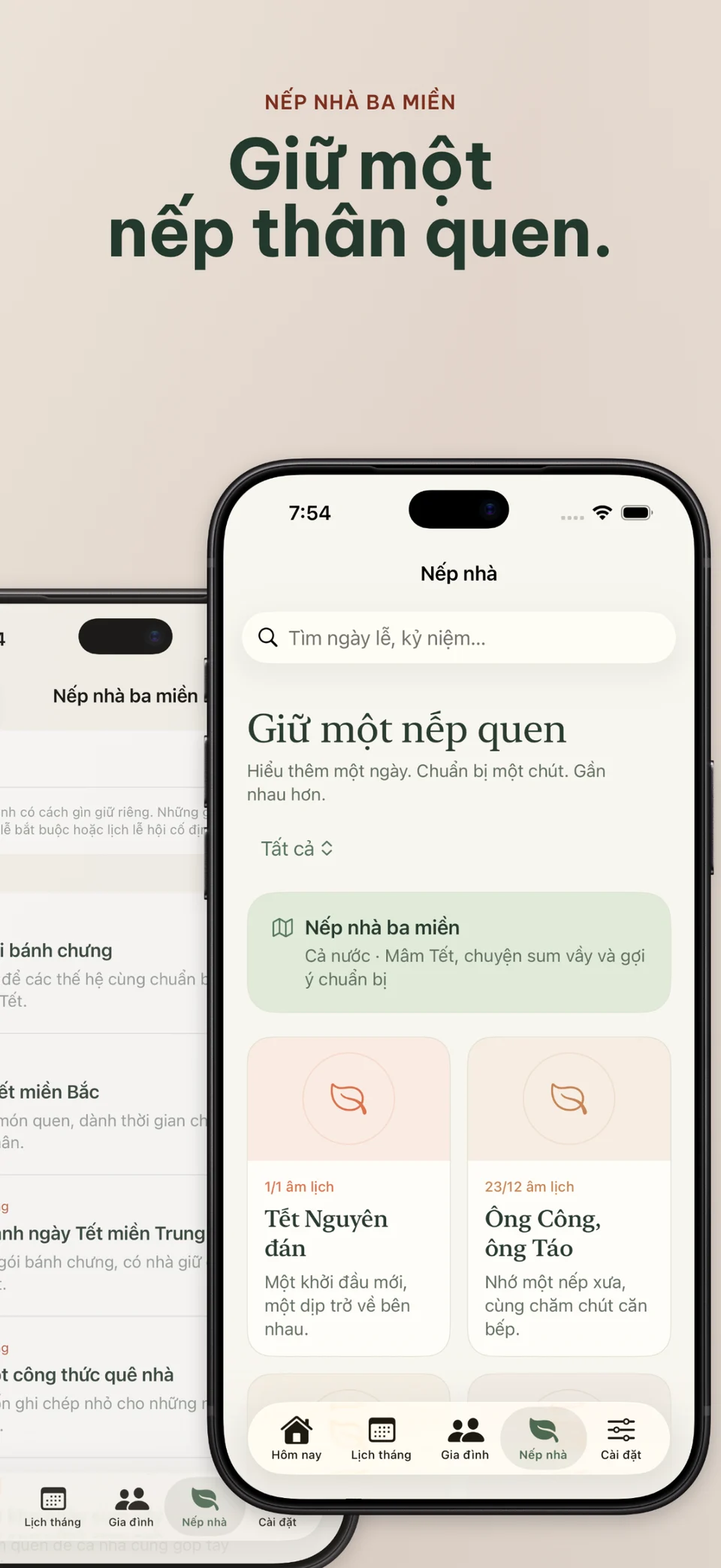
Tết, the Lunar New Year, is the most important holiday of the year for many Vietnamese families. Its familiar customs include cleaning the house, seeing off the Kitchen Gods, arranging the five fruit tray, exchanging New Year wishes and giving lucky money. Preparing feels much lighter when you spread the work across the last lunar month instead of cramming it into the final few days. This guide explains each custom, the common differences between North, Central and South Vietnam, and a suggested timeline.
A note before you read: Tết customs vary by region, by home town and by family. What follows describes widely shared practices as a reference. Where your family does things differently, follow the way your grandparents and parents have always done it.
Year end cleaning: a fresh start
Cleaning the house before Tết is a way of clearing out the old year to welcome the new one. Beyond ordinary cleaning, many families fix broken things, give away what they no longer use, change the curtains and buy flowers.
Cleaning the ancestral altar (often called bao sái) usually happens in the last days of the twelfth lunar month, and many families do it after the Kitchen Gods ceremony. Each family has its own rules about who may clean the altar and with what, so ask the elders first.
To keep it manageable, split the house into zones and clean one zone each weekend during the last lunar month rather than doing everything in one day.
The Kitchen Gods ceremony on the 23rd
The ceremony for Ông Công and Ông Táo, the Kitchen Gods, takes place on the 23rd day of the twelfth lunar month. It sends the Kitchen Gods off to heaven to report on the household's year. Many families hold it before noon on the 23rd, and some do it a day or two earlier if they are busy.
Offerings usually include paper hats and robes for the gods, incense, flowers, fruit and a tray of food or sticky rice, depending on the family. In the North, many families release live carp afterwards, since the carp is said to carry the Kitchen Gods to heaven. In Central and South Vietnam this custom is less common. If you release fish, do it gently in clean water and never throw the plastic bag into the river or lake.
The five fruit tray: different in each region
The mâm ngũ quả, or five fruit tray, is an arrangement of fruit placed on the ancestral altar for Tết, showing respect to the ancestors and hopes for the new year. "Ngũ" means five, but many families do not count exactly five kinds and simply choose fine fruit that is in season.
- North: often a hand of green bananas at the base, with pomelo, Buddha's hand, mandarins, sapodilla and other fruit.
- South: many families choose custard apple, coconut, papaya, mango and fig, whose names together sound like "cầu vừa đủ xài", a wish to have just enough to spend. Some families avoid bananas because the word sounds like "chúi", to tumble forward.
- Central: usually flexible, using fruit available locally, with a focus on abundance and sincerity.
Other differences are easy to spot too: the North favors square bánh chưng and peach blossoms, while Central and South Vietnam favor cylindrical bánh tét and yellow apricot blossoms. These are general tendencies, and many families today mix both.
New Year wishes and lucky money
Chúc Tết means offering New Year wishes to relatives, neighbors and friends, usually starting on the morning of the first day. Many places still follow the saying "day one for father's side, day two for mother's side, day three for teachers".
Lì xì (called mừng tuổi in the North) is lucky money in a red envelope. Adults give it to children, and grown children give it to their parents and grandparents, as a wish for good luck in the new year. The value lies in the wish, not the amount. A few tips:
- Get crisp new notes and envelopes before the end of the last lunar month to avoid a rush.
- Teach children to receive with both hands, say thank you and wish the giver well in return.
- Do not open envelopes in front of the giver or compare amounts.
Another familiar custom is xông đất (called xông nhà in the South): the first person to enter the house after midnight on New Year's Eve is believed to bring luck for the whole year, so many families invite a cheerful person with a compatible birth year in advance.
A Tết preparation timeline by the lunar calendar
Splitting tasks by lunar date helps the whole family know what happens when, so no one carries everything. Here is a suggested timeline to adapt to your own home.
- Early to mid twelfth month: make a task list, share out the jobs, book travel home if you live far away, start cleaning zone by zone.
- The 23rd: the Kitchen Gods ceremony. Many families clean the altar afterwards.
- Around the 24th to 28th: shop for Tết, flowers and offerings; wrap or order bánh chưng or bánh tét; many families visit and tidy ancestral graves during these days.
- The last day of the year (the 30th, or the 29th in a short month): the year end meal, setting out the five fruit tray, and in many homes a ceremony inviting the ancestors home for Tết.
- New Year's Eve: the giao thừa ceremony at midnight, with the family gathered to welcome the new year.
- Days 1 to 3 of the new year: first footing, New Year wishes, lucky money, visiting relatives.
- Around day 3 or 4 (later in some families): the hóa vàng ceremony to see the ancestors off.
Because the twelfth lunar month has 29 days in some years and 30 in others, check that year's lunar calendar for the last day. If your family is spread across several places, sharing this list in a family group helps everyone know their part. Our guide to staying close to family when you live far away has more ideas for busy seasons.
Let a calendar remind you
Preparing for Tết is far easier when the lunar dates remind you at the right time. A standard phone calendar usually does not convert the 23rd of the twelfth lunar month into the right solar date each year, so it is easy to miss.
At TrioX Studios we are finishing Lịch Nhà, a Vietnamese lunar calendar app for families on iPhone. It shows lunar and solar dates together, saves memorial days, birthdays and events with multiple reminders, lets you note what to prepare, and includes a culture library with regional guides, including a section on Tết customs across the three regions. Data stays on your device and no account is needed. Lịch Nhà is coming soon. You can read more in a lunar calendar app for Vietnamese families and remembering family memorial days and holidays.
Frequently asked questions
When is the Kitchen Gods ceremony?
On the 23rd day of the twelfth lunar month. Many families hold it before noon that day, and some a day or two earlier.
How does the five fruit tray differ between North and South?
The North often uses green bananas, pomelo and Buddha's hand, while the South often chooses custard apple, coconut, papaya, mango and fig, and some southern families avoid bananas. The exact arrangement still depends on each family.
How much lucky money is enough?
There is no standard amount. Lucky money is a wish for good fortune, so choose what suits your family, and remember the wish that goes with it matters more.