Living away from home: 6 small habits to stay connected with your family every day
Studying, working far away or living abroad? Six small, realistic habits to stay connected with your family when you live away from home, and keep them going.
Living away from home, whether for university, a job in another city or work and study abroad, brings evenings when you miss your family but do not know what to say on the phone. Staying in touch does not take long calls. It takes small habits repeated regularly. Here are six that are easy to keep.
1. Send photos of meals and everyday little things
Parents rarely ask what project you are working on. What they worry about is whether you are eating properly and whether your place is all right. A photo of your lunch, your desk or the plant you just bought for your room answers those questions faster than any description.
The small stuff is worth sharing too: a heavy rainstorm today, your usual lunch spot raising its prices, a coworker bringing in snacks from their hometown. These details help the people at home picture your life and feel they are still part of it. In return, ask about things at home: does the dog still bark at strangers, what is growing in the garden this season?
2. Set a regular time to call
Calling only when you remember is easy to forget, especially when you are busy or living in a different time zone. A fixed slot, say Sunday evening or after dinner on Wednesday, lets everyone plan ahead. Your parents know you will call at that time so they do not have to wait by the phone, and you do not have to feel guilty about forgetting.
If you live abroad, pick a time that works for both sides, avoiding the hours when your parents are asleep or you have just finished a tiring shift. Calls do not have to be long. Fifteen minutes every week is usually easier to keep up than an occasional marathon call.
3. Create a private family group
Among dozens of work and friend group chats, messages from Mom get buried easily. A private group with only your family gives everyone one shared place to send photos, leave little notes and see each other every day.
A few ideas to stop the group from turning into a noticeboard:
- Everyone shares one photo a day, and it does not have to be a good one.
- Agree to photograph the same thing: dinner, the sky, the shoes you are wearing.
- Do not turn the group into a place for reminders or arguments about the news.
- Save the photos everyone loves so you can look back at them later. Our guide to keeping family photos safe explains how to store them for the long run.
4. Help your parents with technology, patiently
Many parents want to message or video call their children but hold back because they are not used to the apps. Next time you visit, spend an afternoon sitting next to them: show them how to make a video call, send a photo, make the text bigger and play a voice message.
A small trick: write the steps on paper in large letters and stick it near where they keep the phone. Put the apps they use most on the Home Screen. And when they ask for the fifth time, remember that someone once taught you everything over and over too.
5. Record your voice instead of only typing
A voice carries what text cannot: a laugh, a hint of tiredness, the hometown accent you have not heard in a while. For grandparents and parents who do not like typing, a short voice message is also much easier to answer.
Try sending a good morning message, or recording your mother's advice before you set off. Years later, those recordings may be among the things you treasure most. Our post on keeping memories shares more simple habits for holding on to moments like these.
6. Make every trip home a special occasion
However many times a year you get home, make each visit something to remember. Tell your family the date in advance so they have something to look forward to. Bring a small gift from where you live. Keep one day just for being at home: cook a meal with your mother, help your father fix something, go to the local market together.
And take a family photo. Those pictures are what you will open on the homesick evenings ahead.
Missing home is normal, and there is always a way to stay close
Some weeks you will be so busy that you forget to call, or so homesick that you would rather not call in case you cry. Both are normal. Staying connected is not a contest over who calls more. If you have been quiet for a while, a photo and a line like "I've been busy, but I'm okay" is enough to reconnect. If the sadness lasts and starts to affect your daily life, do not hesitate to reach out to close friends or a counselor.
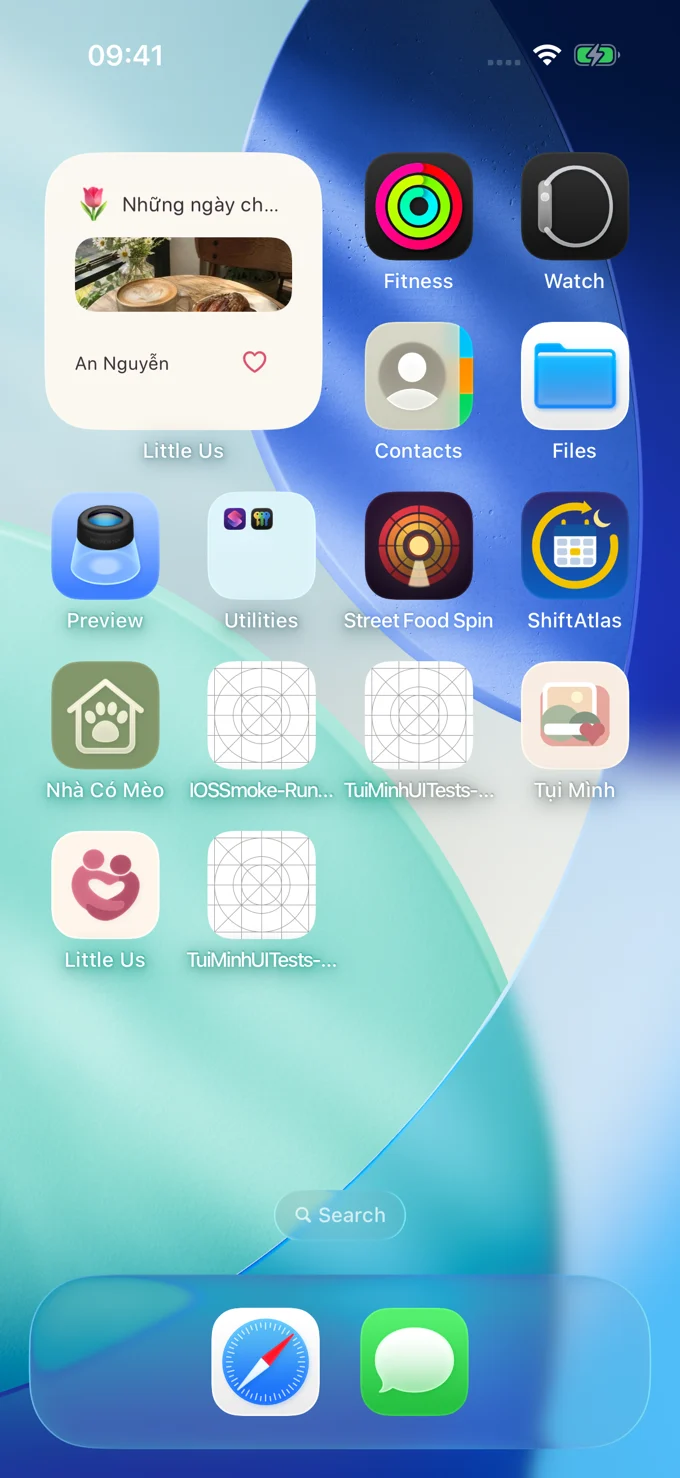
TrioX Studios also makes Little Us, an iPhone app available on the App Store, made for small moments like these. You create a private group and invite family with a code, share photos in that shared space, and add a short message or voice recording. A Home Screen widget can show the photos and messages you choose from the group, so every time you pick up your phone you see dinner at home or your mother's smile.
You can read more about the idea behind the app in our post on Little Us. And if the person you miss most is your partner, our guide to long-distance relationships and 30 little things to do together have ideas for couples living apart.
Frequently asked questions
How often should I call my family when I live far away?
There is no right number. A short call at a fixed time each week is often easier to keep up than long calls whenever you remember, and small photos or messages in between fill the gaps.
How can I help my parents use video calls?
Sit with them in person if you can, show each step slowly, write the steps down in large letters and put the app on the Home Screen. Be patient with repeat questions.
What if I feel homesick all the time?
Missing home is normal, especially in the first months. If the feeling lasts and affects your sleep, study or work, talk to friends you trust or a counselor.