Gamification in the classroom: using points, teams and challenges the right way
What gamification in teaching means and how to use points, teams, challenges and instant feedback to energize a class without turning it into a race for points.
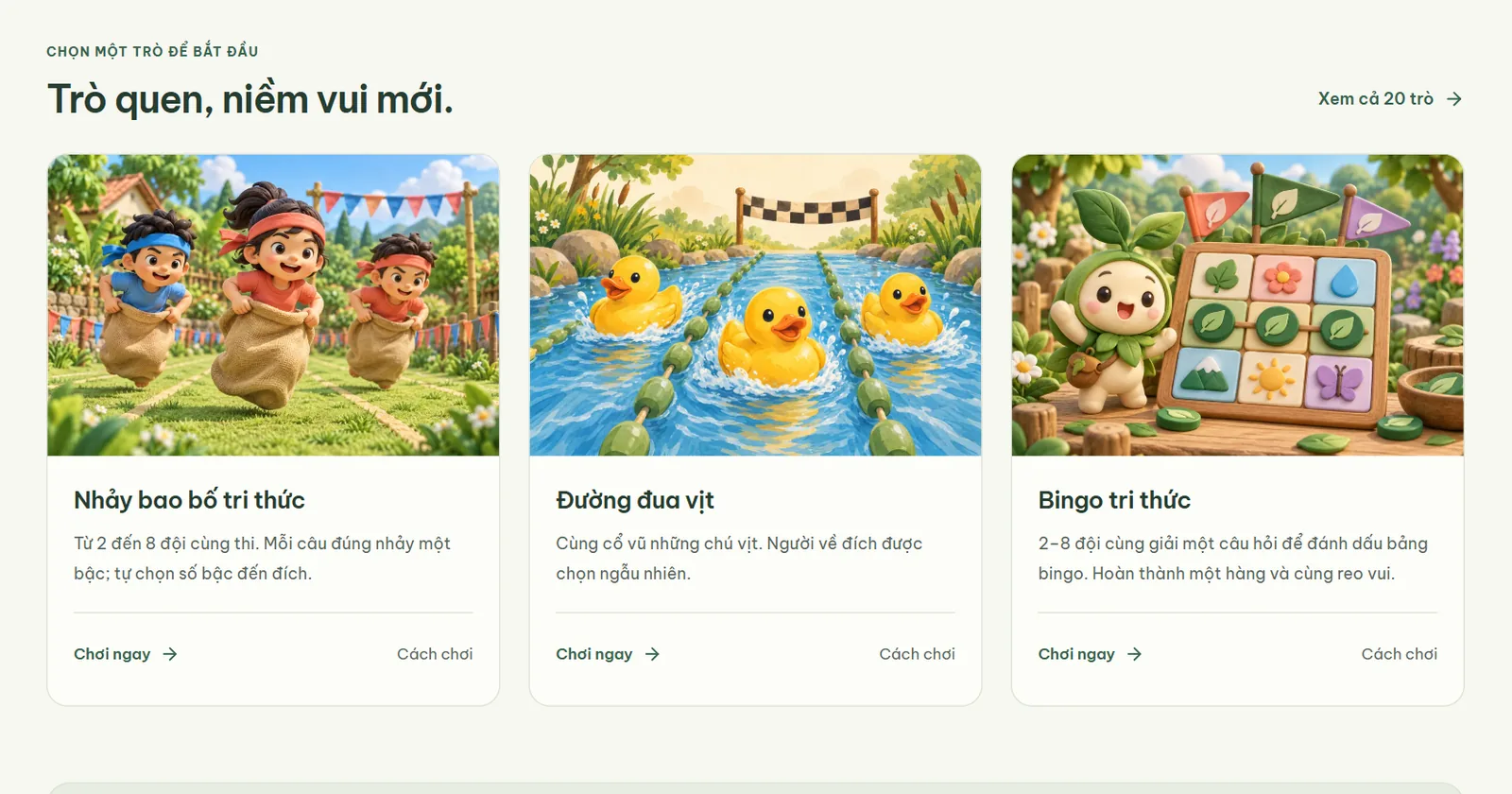
Gamification in teaching means bringing game elements such as points, teams, challenges and feedback into lessons so students take part more actively. Done well, the class gets livelier and students are eager to review. Done badly, everyone just stares at the scoreboard. This guide helps you tell the difference.
What is gamification, and how is it different from game-based learning?
Gamification applies game mechanics to an activity that is not a game, such as a review session or homework. Game-based learning is different: the game itself is the lesson, for example a job simulation that teaches bookkeeping entries, as described in our article on learning accounting through games.
The two complement each other. Gamification is easier to adopt because teachers keep the same content and only change how the activity is run. An ordinary set of review questions, once split into teams with a few rules, becomes a completely different lesson.
Four core elements of a gamified classroom
Points
Points are the simplest way for students to see progress. They only help when they reflect learning, not just who taps fastest. Reward effort and well-explained answers too, not only speed.
Teams
Teams turn individual competition into collaboration. Strong students explain to their teammates, and shy students have support. Reshuffle teams often so no permanent "strong team" forms.
Challenges
A challenge is a task with a clear goal and a fitting level of difficulty. One hard question at the right moment creates more excitement than ten easy ones. The same principle appears in game design basics: teach step by step and raise the difficulty gradually.
Instant feedback
Instant feedback means students know right away whether they are right or wrong, and ideally why. Compared with waiting days for marked work, immediate feedback lets students fix misunderstandings while the question is still on their mind.
How do you keep class from becoming a race for points?
The biggest risk of gamification is that students learn for points instead of for knowledge. A few ways to keep the balance:
- Team scores, not individual ones: nobody gets named at the bottom of the board.
- Keep game points separate from official grades: games are for practice, and mistakes are allowed.
- Leave time to review after the game: which questions most of the class missed, and why. This is the most important learning moment.
- Praise behavior, not just results: a team that worked well together, a student who tried a hard question.
- Change the rules often: sometimes speed, sometimes accuracy, sometimes a shared class goal.
- Watch for students left behind: if someone is always silent, the game is not serving them.
The end goal is to turn outside motivation, such as points or winning, into genuine interest in the subject. The game is a reason to start, not the destination.
A real example: team games on one screen
Mầm, the learning platform from TrioX Studios, is built in exactly this spirit. Teachers write a question set, then the class splits into 2 to 8 teams to play on one shared screen, such as a projector or classroom TV.
Mầm has 20 games, many with names familiar to Vietnamese students: sack race (nhảy bao bố), ô ăn quan, boat race, knowledge tug of war, picture puzzles and crosswords. A few things worth knowing for classroom use:
- No device per student needed: team games run on one screen and the organizer enters each team's answer.
- No personal email for students: when students need to work on their own devices, the teacher opens a quiz room and gives them a code.
- Reports from real answers: view results by student and by question to see what needs reviewing, and export to CSV or print when needed.
The reports are what help avoid the race for points: after class, teachers know not only which team won but which questions the class still struggles with. For a concrete review session, read review games for the whole class. Teachers can start on Mầm's free plan, which has some usage limits.
A sample gamified review lesson
A 45-minute review lesson could look like this:
- 5 minutes: explain the rules and form teams.
- 20 minutes: play a team game with the review question set.
- 10 minutes: go over the questions many teams missed and re-explain the ideas.
- 5 minutes: each team shares one thing they now understand better.
- 5 minutes: a short individual exercise to check understanding.
Steps 3 and 4 are what turn the game into a lesson. Do not skip them, even if the class wants to keep playing.
Does gamification suit every class?
Gamification fits most classes, but the approach needs adjusting. Younger students enjoy movement and color; older students prefer intellectual challenges and teamwork. Outside school, clubs and internal training sessions can use question sets and team games too.
The key is not to use games every lesson. Occasional games create excitement; daily games become routine and lose their pull.
Frequently asked questions
Does gamification make students chase points?
It can, if points are the only thing anyone pays attention to. Team scores, keeping game points away from grades and always reviewing after the game reduce that risk.
Can I gamify a class without enough computers?
Yes. Team games on one shared screen, like those in Mầm, need just one computer and a projector.
How often should I use games?
There is no fixed formula. A sensible approach is to use them for review sessions, end-of-chapter lessons or whenever the class needs a lift.